Friday, September 5, 2025
Problem
Modern smart refrigerators create more problems than they solve: food still expires unnoticed, inventory tracking feels like a chore, and cross-platform experiences are disjointed.
Role
Product Designer (Academic Project), UX Researcher
Tools
Figma, Adobe Illustrator, UserTesting.com
Outcome
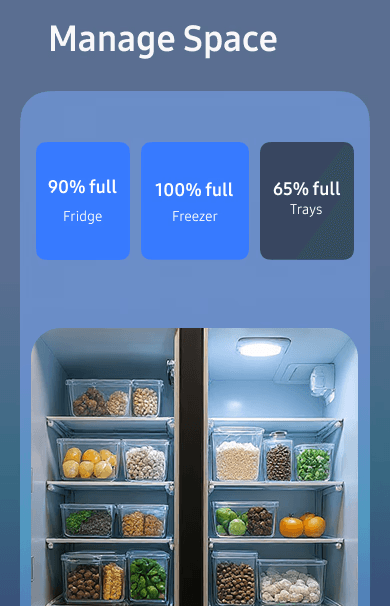
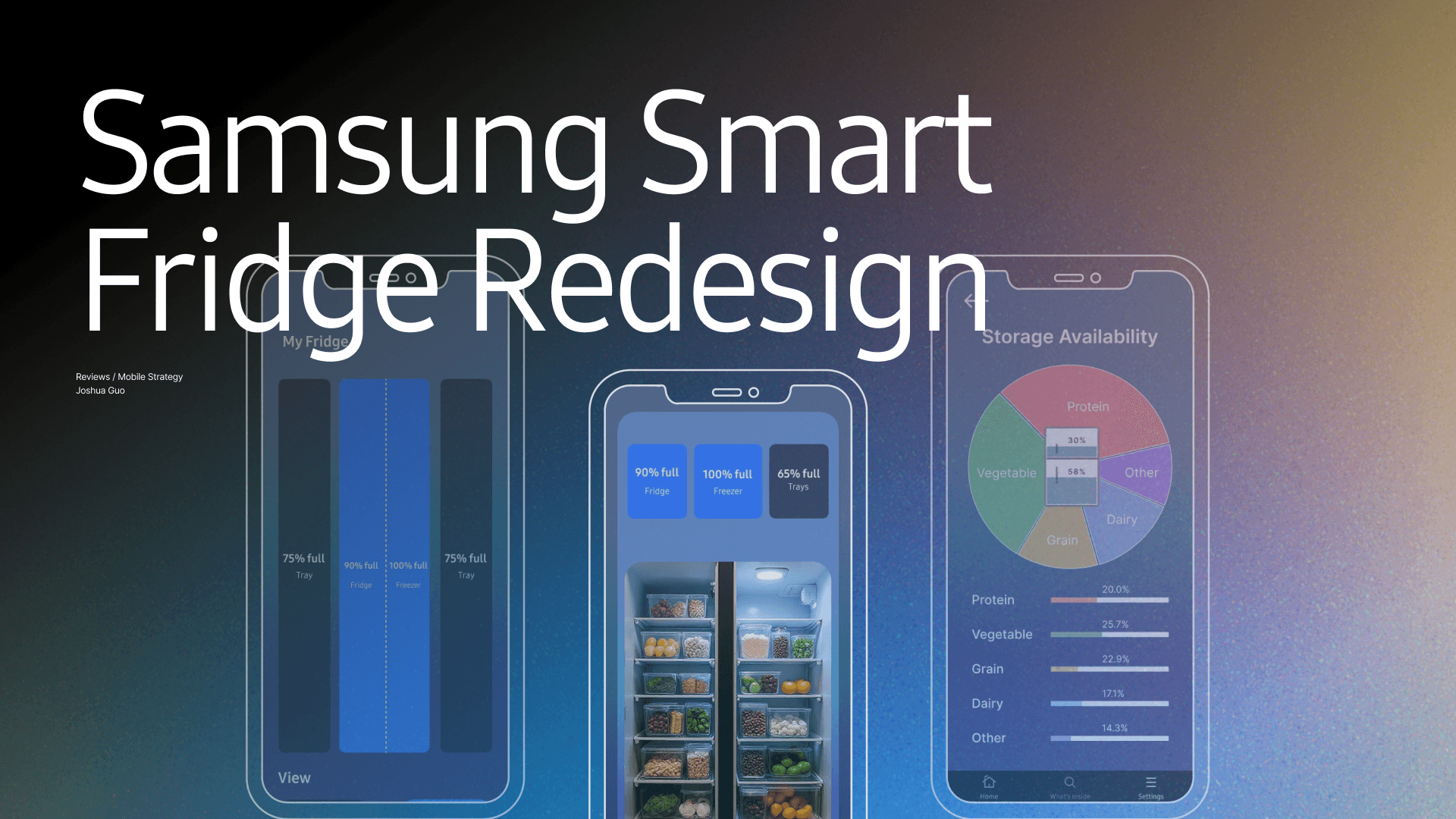
Created a modern cross-platform experience with improved inventory visualization, reducing food identification time from 45 to 12 seconds in usability testing
Understanding the Broken Promise of Smart Fridges
Smart refrigerators promise to reduce food waste, but research showed that up to 40% of tracked food still expires unused. User research was conducted through peer interviews and remote meetings with different users. Through interviews with 8 smart appliance owners, I identified three core problems.
Problem 1: Visibility
"I forgot to check the app, and the UI is usually too small to see everything at once on my phone.
Problem 2: Manual Entry
"Adding items manually takes too long. I stopped using it after two weeks."
Problem 3: Platform Inconsistency
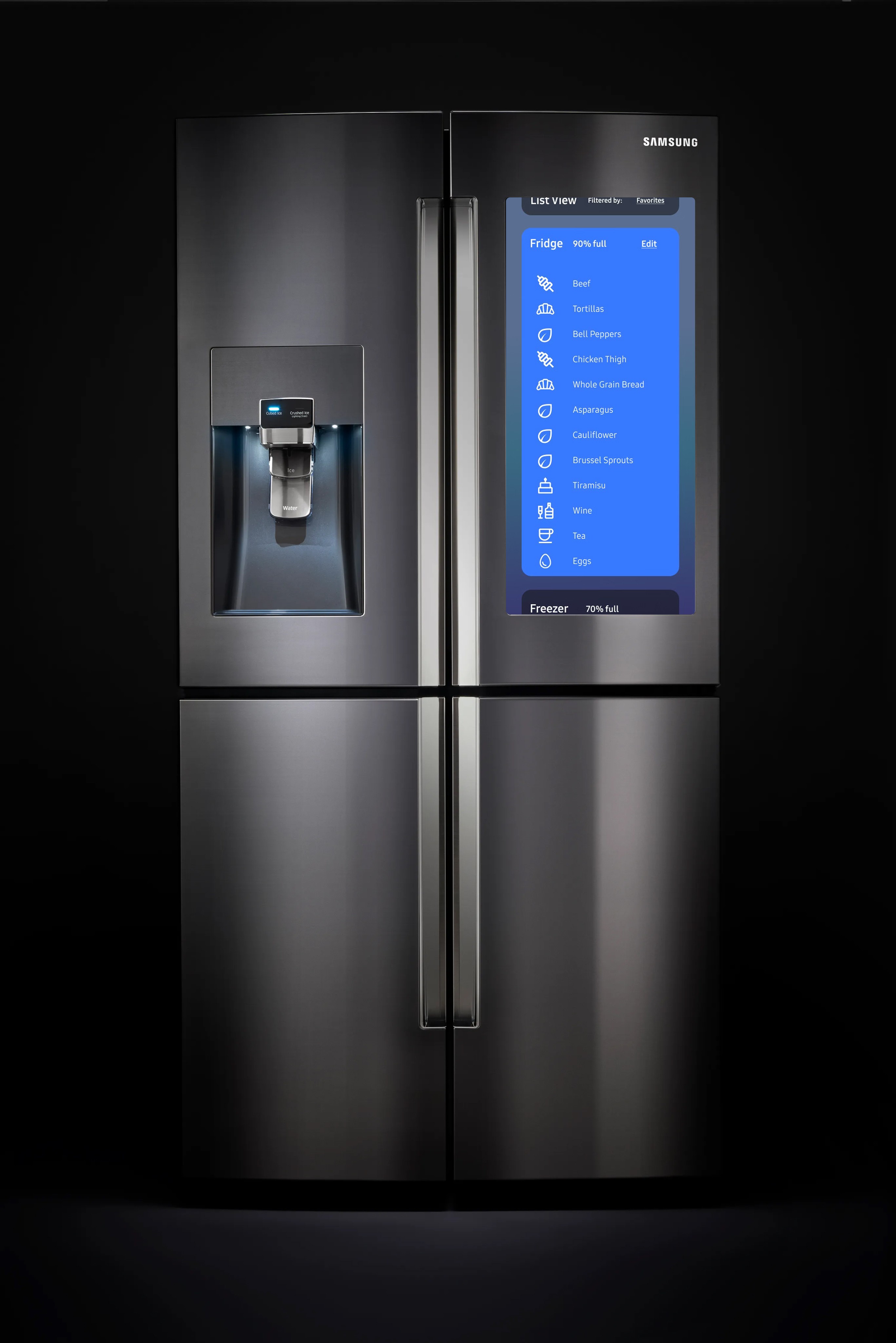
"The app and fridge screen look completely different. I never know where to find things."
A Visual System for Food Waste Prevention
Rather than fighting human behavior, I designed a system that works with how people naturally think about food, using color psychology and user research.
Solution 1: Color-Coded Urgency States
Instead of dates, I used color psychology (green/yellow/red) to communicate urgency at a glance. Users could identify at-risk items in under 3 seconds.
Solution 2: Category-Based Organization
I organized inventory by food type (8 categories) with custom iconography, matching how people naturally scan their fridge.
Solution 3: Cross-Platform Design System
Created a comprehensive component library ensuring consistency between the mobile app (one-handed use, bottom-weighted navigation) and appliance screen (standing distance, 56px minimum touch targets).
What I Learned
An effective, cohesive design system is critical to creating reusable components early, which saved hours in the final weeks and ensured consistency across platforms.
Accessibility drives better design. The constraint placed by meeting WCAG ratios forced me to think about and use better color choices that worked for everyone.
Users don't want more features. They want the core problem (food waste) solved simply. Fighting scope creep was one of my biggest challenges.
Next Steps
With more time, I'd explore:
Photo recognition integration to eliminate manual entry
Predictive algorithms suggesting recipes based on expiring items
Social features for sharing food before it expires
Category:
Data Visualization
Client:
Theoretical Samsung Rework
Duration:
3 weeks
Location:
St. Louis